Key Takeaways
- Artificial Intelligence (AI) is revolutionizing recruitment by automating tasks and enhancing decision-making.
- Remote and hybrid work models are expanding talent pools and necessitating new hiring strategies.
- Diversity and inclusion initiatives are becoming central to recruitment processes.
- Skill-based hiring is gaining prominence over traditional degree requirements.
- AI-driven tools are improving candidate experience and streamlining hiring processes.
Table of Contents
- Introduction
- AI Integration in Recruitment
- Embracing Remote and Hybrid Work Models
- Prioritizing Diversity and Inclusion
- Shift Towards Skill-Based Hiring
- Enhancing Candidate Experience with AI
- Conclusion
As the global workplace continues to undergo significant changes, the future of hiring is being shaped by modern recruitment practices that leverage advanced technology and progressive philosophies. Organizations are reimagining how they attract, assess, and secure talent by adopting strategies that not only streamline operations but also promote inclusivity and growth. One major advancement is the rise of ATS automation, which streamlines the recruitment process while empowering HR departments to approach hiring with greater precision and efficiency.
The evolution of remote and hybrid work models, alongside the prioritization of diversity and inclusion, is rewriting the rules of talent engagement. Candidates are seeking roles in organizations that recognize their unique contributions and offer flexible work environments. As employers embrace these new paradigms, the traditional reliance on degrees is being challenged by the emerging trend of skill-based hiring, enabling a wider range of candidates to enter the workforce and thrive.
Moreover, integrating Artificial Intelligence (AI) into hiring workflows has automated repetitive, time-consuming tasks, allowing recruiters to focus on building strategic relationships and improving organizational culture. These changes are not just surface-level amendments; they are paving the way for a future where both companies and candidates can maximize their potential and achieve meaningful success.
New hiring strategies, combined with evolving technologies, are making the talent acquisition process more transparent, dynamic, and tailored to the needs of an evolving workforce. As a result, organizations and job seekers alike are reevaluating what makes a successful hire and how to foster environments where diverse talents can flourish.
AI Integration in Recruitment
Artificial Intelligence has become a game-changer in modern recruitment. Companies are adopting AI-driven platforms to automate monotonous, error-prone tasks such as resume parsing, initial candidate outreach, and even pre-screening interviews. This helps to greatly reduce the time-to-hire while also limiting human bias at critical decision points. For example, AI systems can analyze massive volumes of candidate data to highlight individuals with unconventional backgrounds who match required skill sets, thereby widening the talent pool. According to a 2025 report by DemandSage, companies using AI in recruitment have reported up to 30% higher efficiency in sourcing and selecting candidates, pointing towards a significant shift in how organizations approach hiring.
Embracing Remote and Hybrid Work Models
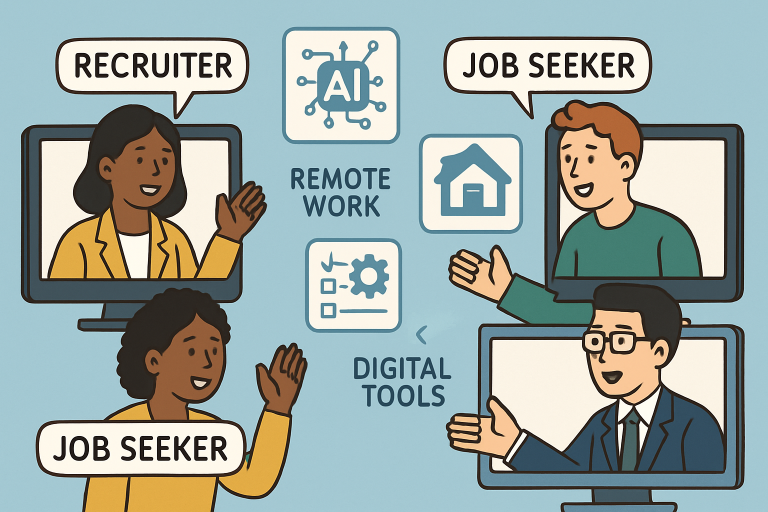
The COVID-19 pandemic catalyzed a permanent shift to remote and hybrid workspaces, sparking a dramatic transformation in talent acquisition. Businesses now recruit across wider geographies, tapping into new and diverse pools of applicants. Virtual recruitment tools such as digital assessment platforms and video interview solutions have become essential for evaluating how candidates will perform outside traditional office environments. However, these advantages come with their own set of challenges. Employers must invest in digital onboarding and collaboration tools to ensure seamless communication and integration of remote employees, an essential strategy for maintaining productivity and engagement long-term.
Prioritizing Diversity and Inclusion
Diversity and inclusion (D&I) are now business imperatives, directly tying into organizational culture and performance. Comprehensive D&I strategies begin during recruitment: companies develop inclusive job descriptions, set measurable D&I objectives, and often create dedicated D&I roles. Diverse teams drive better business outcomes and are more adept at creative problem-solving. Candidates also increasingly expect transparency around D&I initiatives, including policies, representation, and support for underrepresented groups, making these priorities essential for employers aiming to attract top talent in a competitive market.
Shift Towards Skill-Based Hiring
Skill-based hiring emphasizes a candidate’s abilities and practical knowledge rather than traditional credentials or educational pedigree. As technologies advance, especially in crucial sectors such as AI, data science, and green technology, employers are turning to alternative pathways, such as apprenticeship programs, online certification courses, and boot camps. This approach helps fill critical skill gaps quickly and supports workforce agility, especially as emerging fields evolve faster than traditional academia can adapt. By broadening access, skill-based hiring not only addresses labor shortages but also fosters diversity and social mobility within organizations.
Enhancing Candidate Experience with AI
AI is not only transforming internal hiring practices but also improving the candidate journey itself. Automated application tracking, smart interview scheduling, and personalized feedback mechanisms ensure candidates are kept informed and engaged. AI-powered chatbots guide applicants throughout the process, answer their questions in real time, and connect them to next steps, reducing uncertainty and increasing satisfaction. However, a human touch remains vital; a compassionate follow-up or personalized message ensures the application process remains candidate-centered and respectful, a necessity in high-competition industries. This balance between efficiency and empathy is central to modern recruitment strategies.
Conclusion
The landscape of recruitment is undergoing rapid evolution, driven by technological innovation and a renewed focus on inclusivity and flexibility. As organizations adapt to new paradigms and workforce expectations, an ongoing commitment to automation, skill-based recruitment, and meaningful candidate engagement will be key to attracting and retaining the best talent. Forward-thinking companies that embrace these principles will be well-positioned to thrive in the ever-changing future of work.