Key Takeaways
- Plan around the way people will actually use the yard throughout the year.
- Create distinct areas for dining, cooking, relaxing, play, and movement.
- Let sunlight, wind, drainage, and local climate guide important decisions.
- Choose durable materials, efficient lighting, and plants suited to the site.
- Include weather protection, storage, and a realistic maintenance routine from the start.
A backyard that works in every season begins with practical choices, not a collection of separate features. Whether the goal is a quiet place for coffee, a dependable area for family meals, or a setting for larger gatherings, the layout should make everyday outdoor time easier. Routine care also matters, and fall cleanup services can help keep leaves and seasonal debris from overwhelming planting beds, paths, and drainage areas.
The most successful outdoor spaces balance comfort, circulation, appearance, and upkeep. Rather than designing only for warm summer weekends, consider what the yard needs during rainy spring days, hot afternoons, cool autumn evenings, and winter weather.
1. Start With Real-Life Outdoor Habits
Begin by listing the activities the yard needs to support. Think about who will use it, how many people may gather at once, and which activities need to be close to the house. A grill used several nights a week should be convenient to the kitchen, while a reading nook may work better in a quieter corner.
- Who uses the backyard most often?
- Where will guests sit, eat, and move through the space?
- Which areas need shade, privacy, or shelter?
- What needs easy access to water, power, or storage?
2. Divide The Yard Into Useful Zones
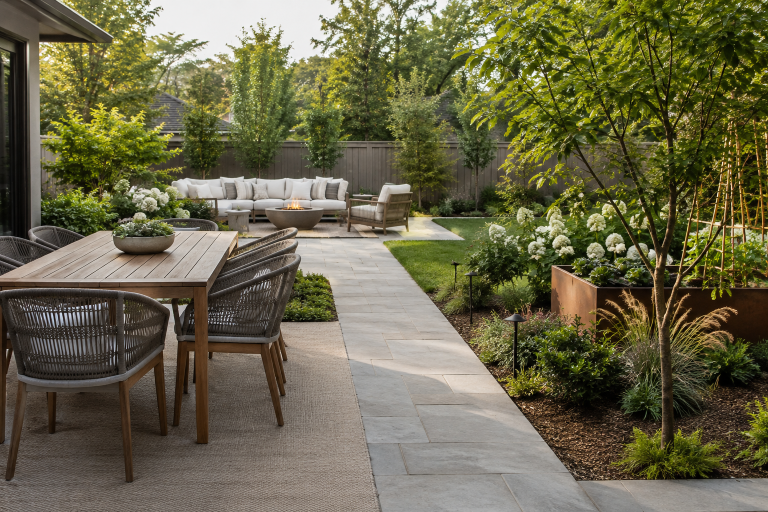
Clear zones make even a modest backyard feel more organized. Common zones include dining, cooking, lounging, gardening, children’s play, poolside seating, and a fire feature. These spaces do not need walls between them, but changes in paving, planting, furniture arrangement, or elevation can give each one a purpose.
Connect zones with walkways that are wide enough for comfortable movement. Direct paths reduce worn grass, muddy shortcuts, and awkward traffic through seating or cooking areas.
3. Let Sun, Wind, And Rain Shape The Layout
Watch the property before making permanent decisions. Morning and afternoon sun can affect where people want to sit, while prevailing wind can make an exposed patio unpleasant during cooler months. Note low spots where water collects, areas where leaves accumulate, and views that deserve framing or screening.
Observing the yard in various types of weather often reveals issues that are easy to miss on a dry, mild day. This information helps determine where to place shade structures, drains, planting beds, and outdoor furniture.
4. Choose Materials That Can Handle Four Seasons
Hardscape materials should fit both the home’s look and local conditions. Natural stone, concrete pavers, composite decking, treated wood, metal, and outdoor-rated fabrics all have different maintenance needs. Consider moisture exposure, slip resistance, sun exposure, repair options, and how surfaces may respond to freezing and thawing.
Installation matters as much as the finished surface. A patio or path needs appropriate base preparation, grading, and drainage so water does not undermine the work over time.
5. Add Shade And Weather Protection
Shade can make a sunny yard usable for more hours of the day. Trees, pergolas, retractable shades, pavilions, and covered patios offer different levels of protection. An open pergola can provide filtered shade and airflow, while a roofed structure offers stronger coverage from direct sun and rain.
- Choose open shade when ventilation and flexibility are the priority.
- Choose a covered structure when furniture or cooking areas need reliable protection.
- Choose adjustable coverage when conditions change throughout the day.
6. Use Plants To Improve Comfort And Character
Plants can provide privacy, shade, seasonal color, texture, and softer edges around hard surfaces. Select trees, shrubs, grasses, and flowering plants according to the site’s soil, sunlight, moisture, and temperature conditions. Grouping plants with similar water needs also simplifies irrigation and routine care.
For landscapes with irrigation, water-efficient irrigation planning can help homeowners focus on plant needs, seasonal adjustments, and avoiding unnecessary water use. A dependable planting plan often combines evergreen structure with seasonal interest and low-growing plants that help cover bare soil.
7. Plan Lighting For Safety And Evening Use
Outdoor lighting should first make the property easier to navigate after dark. Illuminate steps, walkways, entries, changes in elevation, cooking areas, and dining spaces. Then add softer lighting to highlight planting beds, trees, or focal points without turning the entire yard into one brightly lit area.
Layered lighting is usually more comfortable than relying on a single powerful fixture. Choosing efficient fixtures and controls can also reduce energy use, and the Department of Energy outlines considerations for energy-efficient exterior lighting. Aim fixtures carefully to limit glare for people in the yard and nearby homes.
8. Solve Drainage Before Adding Finishing Features
Drainage problems should be addressed before new patios, lawns, or planting beds are installed. Puddles near the home, washed-out mulch, muddy paths, erosion, and water flowing toward a foundation are all signs that deserve attention. Depending on the cause, solutions may include grading changes, downspout extensions, channel drains, permeable paving, or a rain garden.
The goal is to direct water appropriately, not simply hide the visible symptom.
9. Add Features That Support More Months Of Use
The right comfort feature can extend the backyard season. A fire pit or fireplace can make cool evenings more inviting, while ceiling fans, screens, and shade help during warm weather. Weather-resistant storage keeps cushions, tools, and outdoor accessories protected and close at hand. Privacy planting can also make a seating area feel more relaxed without closing off the yard.
10. Build A Simple Maintenance Plan
Low-maintenance does not mean maintenance-free. In spring, inspect drainage, clean surfaces, and check lighting. In summer, adjust irrigation and monitor plants for heat stress. In fall, remove leaves, inspect structures, and prepare sensitive plants for colder weather. In winter, protect furniture, address ice hazards, and check hardscape surfaces after freeze-and-thaw conditions.
11. Common Planning Mistakes To Avoid
- Making a patio too small for furniture and circulation.
- Waiting until construction begins to address drainage.
- Selecting plants only for appearance rather than site conditions.
- Placing cooking features too far from the house.
- Using one light source for the entire yard.
- Forgetting utility access for lighting, water, cooking, or heating.
- Designing solely for summer use.
12. Follow A Practical Planning Sequence
List required activities, measure the property, and mark slopes, utilities, mature trees, and drainage concerns. Track sun, wind, and water movement before sketching zones and connecting paths. Next, choose materials and plants that suit the climate and maintenance expectations. Plan utilities, lighting, storage, drainage, and structures before construction begins. If the full project is too large for a single phase, complete foundational work first so that later additions fit the overall plan.
Conclusion
A backyard designed for year-round use is built around real habits, local conditions, and long-term care. When circulation, weather protection, drainage, planting, lighting, and maintenance are considered together, the space can remain safe, comfortable, and inviting through every season in 2026 and beyond.