You might be feeling caught between embarrassment and frustration right now. Eating is harder than it should be, you catch yourself covering your mouth when you laugh, and every time you see a photo of yourself you notice the missing tooth before anything else. You know you need to do something, but the choices feel confusing and the idea of oral surgery can be scary. An experienced oral surgeon in Des Plaines, IL can help you understand your options and move forward with confidence.
If that is where you are, you are not alone. Tooth loss is very common, especially as people age. A national report on oral health in America shows that many adults live with missing or failing teeth, and it affects far more than just their smile. It affects nutrition, social life, and even overall health. Because of this, you might be wondering whether dental implants are worth the time, cost, and emotional energy.
Here is the short answer. Modern implant dentistry is designed to restore how your mouth works and how it looks, at the same time. A properly planned dental implant can let you chew normally again, speak with confidence, and smile without thinking about it. It is not a quick fix, and it is not right for everyone, but when it is done well it often feels the closest to getting your own tooth back.
Why missing teeth affect so much more than your smile
To understand why implant dentistry for function and aesthetics matters, it helps to look at what happens when a tooth is lost and nothing replaces it in a stable way.
First comes the obvious change. There is a gap. You might avoid smiling, or you learn to smile without showing your teeth. You might feel older than you are. That emotional weight is real. Many people say they feel less like themselves after losing a front tooth, and even a missing back tooth can make them self conscious when they laugh or yawn.
Then come the hidden changes. Teeth work as a team. When one is missing, the others start to shift. The tooth above or below the gap can “drop” into the space. Neighboring teeth can lean or rotate. This can change your bite, create food traps, and make cleaning harder. Over time, this can lead to more decay, gum problems, and more tooth loss. Studies summarized in resources like the Oral Health in America report highlight how tooth loss often snowballs into broader oral health issues.
There is also the bone to think about. The jawbone that used to hold the tooth root starts to shrink once the root is gone. The body “recycles” bone that is not being used. This can slowly change your facial shape, giving the mouth and cheeks a collapsed or aged look, especially if several teeth are missing.
So where does that leave you? You are living with the stress of appearance, the annoyance of chewing on one side, maybe some discomfort from a loose partial denture, and a quiet worry that things will only get worse if you wait.
How an oral surgeon and implant dentist rebuild function and aesthetics together
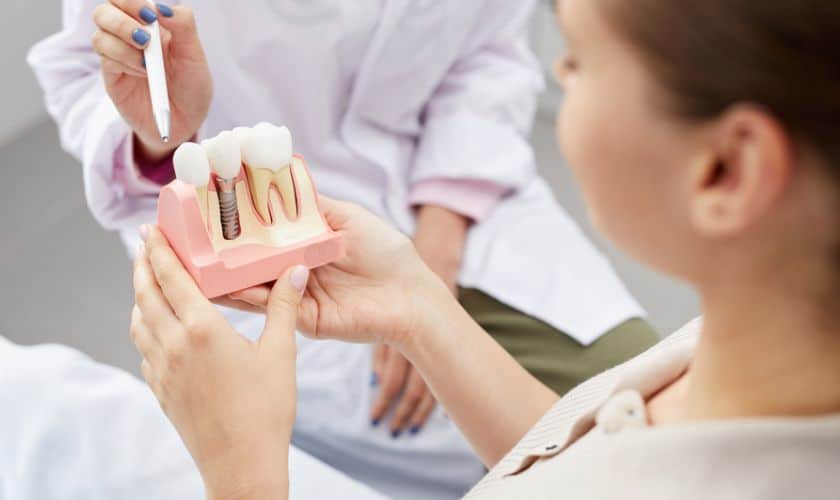
This is where an experienced oral surgeon and implant dentist can change the story. A dental implant is a small titanium post that is placed into the jawbone where the tooth root used to be. Over time, the bone attaches to the implant. Once this healing is complete, a custom crown, bridge, or denture is attached to the implant so it looks and works like a natural tooth.
If you are wondering what the actual process looks like, the Mayo Clinic offers a clear overview of dental implant surgery steps and recovery. Reading that can help you picture each phase instead of imagining the worst.
From a functional point of view, a well placed implant can restore your bite on that side so you can chew more evenly. That means less stress on the remaining teeth and often less jaw discomfort. Because the implant is anchored in the bone, it usually feels more stable than a removable partial denture. You can eat things like apples, nuts, or crusty bread with more confidence, instead of constantly worrying that something will move or break.
From an aesthetic point of view, the crown on top of the implant is designed to match your other teeth in shape, size, and color. An experienced cosmetic dentist will look at your smile line, the way your lips move, and the symmetry between both sides of your mouth. The goal is not just to fill the gap. The goal is to make the new tooth look like it has always belonged there.
There is also a long term benefit. Because the implant is in the bone, it helps keep that part of the jaw from shrinking as fast. That support helps maintain the natural contour of your gums and jawline, which affects your overall facial appearance.
Of course, no treatment is perfect. Dental implants require surgery. They take time to heal. They cost more up front than a simple removable partial. This is where the “nuanced” part really matters, because your situation is not the same as anyone else’s.
Imagine two different people. One lost a single front tooth in an accident and has healthy gums and bone. For them, a single implant with a crown can be a strong, long lasting solution that feels very natural. Another person has lost many teeth over the years, has some bone loss, and already wears a loose denture. For them, a few strategically placed implants can anchor a new denture so it snaps into place. They still remove it to clean, but it no longer slips when they talk or eat.
Both are examples of restorative implant treatment, yet they look very different in practice. This is why a thoughtful consultation with an oral surgeon and implant dentist matters more than any ad or brochure.
Comparing your options when you want both function and aesthetics
You might be weighing different ways to replace missing teeth and wondering how they truly compare. The table below gives a simple side by side view of common options when your goal is to restore how your mouth works and how it looks.
| Option | How it works | Function when eating | Aesthetics and stability | Typical longevity |
|---|---|---|---|---|
| Dental implant with crown | Titanium post in bone with a custom crown on top | Very close to a natural tooth. Strong bite on that side. | Highly natural look. Fixed in place. No movement. | Often 10+ years with good care. Many last much longer. |
| Fixed bridge on natural teeth | Neighboring teeth are trimmed and support a 3 tooth unit | Good chewing ability. Teeth feel solid. | Can look natural, but depends on the health of supporting teeth. | Often 7 to 10 years. Can be less if supporting teeth weaken. |
| Removable partial denture | Removable plate with replacement teeth that clips to existing teeth | Chewing is possible but often weaker. Some foods are difficult. | Can look acceptable, but may feel bulky or move slightly. | Typically 5 to 7 years before major adjustments or remake. |
| Do nothing | Leave the space empty | Chewing shifts to other areas. More stress on remaining teeth. | Visible gap. Teeth can shift. Changes in facial shape over time. | Bone loss and bite changes continue over the years. |
Medical references such as the StatPearls overview of dental implants explain in more clinical terms how implants integrate with bone and how success rates compare. For you, the key question is simpler. Which option will let you eat, speak, and smile in a way that feels like yourself again, and that you can realistically maintain?
Three practical steps you can take right now
1. Clarify what “success” looks like for you
Before you sit in any dental chair, take a quiet moment and define your priorities. Is your main concern appearance when you smile. Is it being able to chew on both sides. Is it avoiding something removable. Write down your top three goals in plain language. Bring that list to your consultation. This helps your oral surgeon and implant dentist shape a plan that fits your life, not just your X rays.
2. Ask the right questions in your consultation
During your visit, do not be shy about asking direct questions. For example.
- Am I a good candidate for implant tooth replacement based on my bone and health.
- What are my non implant options, and how would they look and feel different.
- How many appointments will this take, and what is the expected healing time.
- What will I look like during treatment. Will I have a temporary tooth.
- What are the main risks in my specific case, and how do you manage them.
A thoughtful provider will welcome these questions. The goal is for you to understand the plan and feel comfortable with each step.
3. Plan for long term care, not just the surgery
Implants can last many years, but they are not “set and forget.” Before you move forward, talk about maintenance. Ask how often you should have professional cleanings. Ask what kind of brush or cleaning tools they recommend around the implants. Make sure you understand habits that might put your result at risk, such as smoking or untreated teeth grinding. A clear maintenance plan protects both the function and the appearance of your new teeth.
Moving toward a smile that feels like yours again
You may still feel nervous, and that is understandable. Losing a tooth or several teeth is more than a dental problem. It touches your confidence, your health, and your daily life. The good news is that modern dental implant treatment is built to address all of that together. It is about restoring how you bite and chew, and also how you see yourself in the mirror.
You do not have to decide everything today. Your next step can simply be an honest conversation with an oral surgeon and implant dentist who will listen to your story, examine your mouth, and walk you through the options in clear language. With the right guidance, you can move from feeling stuck and self conscious to feeling steady, comfortable, and ready to smile without thinking about it.