From executive suites to high-risk industrial sites, communication is no longer viewed as a utility—it is increasingly recognized as a form of critical infrastructure. As organizations face mounting operational, environmental, and regulatory pressures, dependable two-way communication is being reassessed through a new lens: resilience, risk exposure, and long-term value.
For CFOs, COOs, and risk leaders, communication reliability is no longer a technical detail delegated to procurement teams. It is a strategic asset tied directly to operational continuity, workforce safety, and financial protection. Industrial two-way radios—once treated as interchangeable tools—are now emerging as essential components of enterprise resilience strategies.
Operational Resilience Starts with the Signal
Operational resilience has evolved far beyond regulatory compliance. Today, it represents an organization’s proven ability to anticipate disruption, endure operational stress, recover rapidly, and adapt under pressure. Whether the threat comes from extreme weather, supply chain breakdowns, or onsite emergencies, resilience is measured by what continues to function when systems fail.
One element is consistently underestimated in this equation: frontline communication.
When cellular networks degrade, Wi-Fi collapses, or digital platforms lag under load, industrial radios often become the final operational link between teams, supervisors, and emergency response. In these moments, communication failure doesn’t just slow work—it amplifies risk, escalates incidents, and exposes organizations to financial and reputational harm.
Recognizing this blind spot, RETEVIS has reframed how enterprise leaders evaluate industrial communications. Rather than focusing on device features alone, the company has introduced a structured reliability framework supported by a diagnostic assessment designed for executive decision-makers. The objective is simple: turn communication reliability into a measurable, auditable component of enterprise risk management and ESG performance, particularly in worker safety and duty of care.
Translating Technical Reliability into Business Risk
Communication failures rarely appear as isolated events. They cascade.
A coverage gap in a logistics hub can disrupt dock coordination and reduce throughput. A failed radio in a hazardous environment can delay incident response and escalate liability. In regulated industries, the wrong equipment choice can trigger compliance breaches or invalidate insurance coverage.
To address this, RETEVIS has developed a tiered reliability model that converts technical performance into business logic—allowing leaders to align communication investments with operational risk profiles.
Tier 1: Reducing Operational Drag and Ownership Costs
The first tier focuses on high-usage environments such as warehousing, campus security, retail logistics, and facilities management. Here, the primary challenge is durability under constant daily use.
Reliable devices at this level reduce replacement cycles, minimize downtime, and lower IT and support overhead. The financial case centers on total cost of ownership: fewer failures, less disruption, and predictable asset lifespans. This tier represents a straightforward efficiency gain with immediate budgetary impact.
Tier 2: Maintaining Continuity in Hostile Environments
Organizations operating outdoors or in complex facilities face a different set of risks. Temperature extremes, moisture, dust, corrosion, and vibration can compromise standard equipment long before its expected lifecycle ends.
This tier addresses environmental resilience. For sectors such as food processing, utilities, transport infrastructure, and remote operations, communication reliability directly affects service continuity. The return on investment is measured in avoided work stoppages, protected assets, and the ability to maintain service-level commitments during adverse conditions.
Tier 3: Preventing Catastrophic Failure and Liability
The highest tier applies to industries where failure is not an option—energy, chemicals, mining, utilities, and heavy manufacturing. In these environments, communication devices must meet certified intrinsic safety standards to prevent ignition in explosive atmospheres.
At this level, the business case is absolute. Compliance protects insurance coverage, limits catastrophic liability, and safeguards multi-million-dollar infrastructure. More importantly, it fulfills the organization’s legal and moral obligation to protect human life. The cost of using non-compliant equipment is not just financial—it is existential.
Why Verifiable Standards Matter at the Executive Level
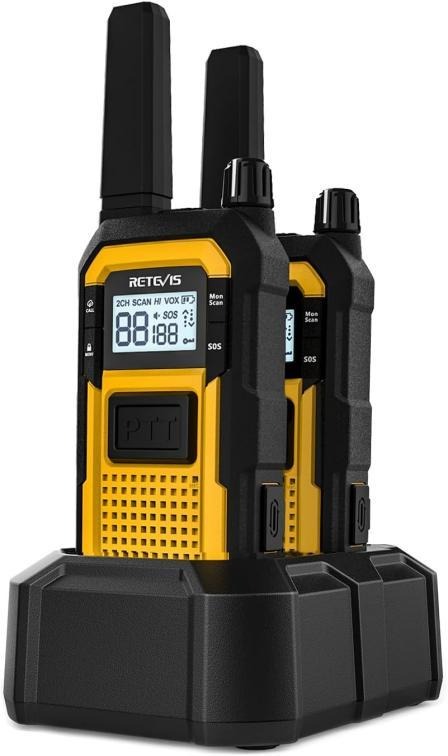
A central pillar of this framework is independent, verifiable testing. RETEVIS aligns its industrial product lines with MIL-STD-810H environmental testing, a rigorous benchmark originally developed for military equipment.
For corporate buyers, this matters. It transforms durability from a marketing claim into a documented risk reduction measure. Devices tested under this standard offer predictable performance under stress, supporting long-term planning, insurance discussions, and procurement accountability.
In an environment of heightened regulatory scrutiny and growing emphasis on operational transparency, executives are increasingly prioritizing assets that can be justified, audited, and defended at board level.
Reliability Is No Longer a Procurement Detail
As regulatory demands tighten and disruptions become more frequent, the lowest-cost option is often the most expensive decision over time. Communication systems that fail under pressure introduce hidden costs—lost productivity, safety incidents, compliance exposure, and reputational damage.
By pairing a structured reliability standard with industrial-grade hardware, RETEVIS is repositioning two-way radios as part of the enterprise resilience stack rather than a tactical expense. The result is a clearer line between communication investment and outcomes such as uptime, safety performance, and financial stability.
The Strategic Takeaway
Reliable communication is not a convenience. It is infrastructure.
Organizations that treat it as such gain more than operational efficiency—they gain predictability, protection, and resilience in an increasingly volatile environment. As businesses continue to rethink what truly supports continuity, the unbroken signal is emerging as a strategic necessity, not a luxury.
For leaders focused on safeguarding operations, people, and profitability, investing in resilient industrial communication is no longer optional—it is foundational.